
Training and Skills Assessment

Wearable, Wherever
Sometimes the only way to get valuable insights is to watch behaviour and decision-making unfold as they happen. Tobii Glasses X puts you in the shoes of real people in real situations. Give a clear look at professional performance, employee and user behaviour, no matter where they are, what they’re doing with our simple-to-use software, Glasses Explore.
Eye tracking allows for effective training and skills assessment in many industries, sports, and job roles.
Why Eye Tracking ?

The talent that defines top performers comes from how they have developed their skills by analyzing their subconscious behavior using eye tracking technology – This is evident in different fields from surgeons in an operating room to pilots in a flight simulator or even athletes on a playing field.
Performance and Decision Making

Recognize how your workers behave in the workplace and identify elements that affect health and safety, like situational awareness.
Safety and Risk Assessment

A lot of the skills that employees learn over time are not easy to see and are hard to write down. The thing about eye tracking is that it lets you watch and understand this knowledge so that it can help with training keeping people and making sure everything is done the way. Eye tracking is really useful for understanding this kind of knowledge.
Productivity and Quality
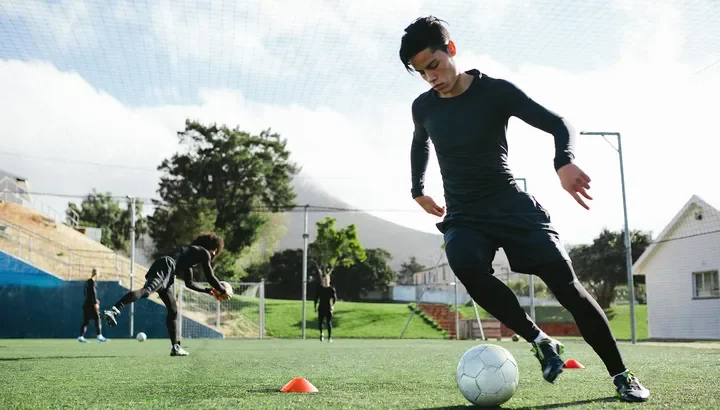
Sports Performance Research
Our eye tracking systems record gaze behavior information that may be utilized to create better training regimens, evaluation techniques, and injury prevention plans.
What Eye Tracking Unfolds ?
While traditional methods remain common, eye tracking offers new ways to improve efficiency, insight, and skills development.
Traditional training methods v/s Training with Tobii eye tracking
Observation-based evaluation: uses teacher observation, videos, and manuals to evaluate performance.
Outcome-only comments: Feedback is given based on results rather than decision-making processes.
Identification of slow skill gaps: To find skill gaps, lengthy training cycles are necessary.
Expertise that is difficult to scale: Difficult to scale expert knowledge across teams.
Insufficient awareness of attention: restricted insight into cognitive load and attention.
Post-training assessment: Training efficacy is assessed after the fact.
Traditional training methods
Training with Tobii eye tracking
Insight into objective performance: uses objective gaze data to determine how students actually complete tasks.
Visibility of decision-making: reveals the visual tactics used by both experts and beginners.
Quicker acquisition of skills: reduces training time by identifying areas where attention is lacking.
Scalable professional knowledge: transforms expert visual behavior into training insights that can be used again.
Measuring attention in real time: evaluates situational awareness, workload, and attention in real time.
Constant, data-driven development: allows for data-driven enhancements in skill development and training.